
SPOILER ALERT!
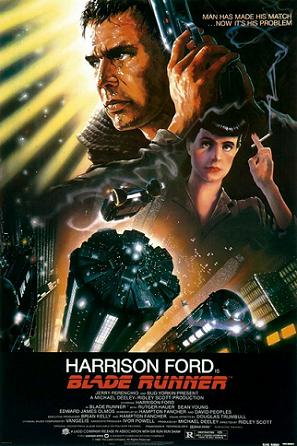
This week, I watched Blade Runner. This is a movie I have seen, though only the final cut which was released in 2007. I decided to watch the 1982 US theatrical version of the film this week since that’s what is actually on AFI’s list. That is the version I am reviewing here, although I do plan to point out a key difference in the versions.
This film begins in November 2019 in Los Angeles. All I could think about during the opening scenes of the movie is the optimism that filmmakers of the 80s had about our progress as a society, especially in the field of science. We are all still waiting for hoverboards that actually hover like Marty McFly’s during his trip to 2015, and I have a feeling that 2019 will come and go without us moving off-planet, driving flying cars, or creating such convincing artificial intelligence that most robots are indistinguishable from humans as shown in Blade Runner. But hey, we have wireless headphones and dessert that makes you look like a dragon, so I guess that’s something…
It’s also eye-opening to realize how many things were so ingrained into the culture in 1982 that the filmmakers couldn’t imagine that in 37 years those facets of society might be a relic of the past- shoulder pads, perms, smoking indoors, just to name a few. Although the film is set in present day, nothing feels present about it. I suppose if it did, we would be accusing Ridley Scott of some sort of witchcraft, so that’s probably for the best. But because of this, I don’t think this movie ages well. Similarly, I’m sure some of our modern-era sci-fi films set in the future won’t age well once we hit that future era. It’s simply impossible not to compare the film’s world with reality and thus mark all differences as flaws of the film. That’s an unfair lens through which to view a movie such as this, but we do it all the same.
It was also difficult for me not to compare this cut to the final cut. The first very jarring difference is the voice-over. Peppered throughout the US theatrical cut is Harrison Ford’s voice explaining bits of information about the world of the movie, about characters, about himself. This is completely removed from the final cut of the film, so I had no idea to expect it as I watched this movie. I am of two minds about this aspect of the film. While the dialogue actually made the movie easier to follow, Ford clearly phoned it in on the day he was asked to record these lines. This is not uncharacteristic of Harrison Ford – he’s an amazing actor… when he wants to be. So while I was able to follow the story and feel less confused, I also felt like I was being pulled out of the movie every time his voice-over was added.
Once I was able to move past the terrible voice-over, I tried to focus on the story line of this film. At its core, it’s easy enough to follow: robots called replicants are banned from earth but are used on off-world colonies, but four such replicants escape a colony and return to earth where they are now being tracked down by Harrison Ford. It’s a cops-and-robbers plot line that’s been done a thousand times with some variation. What makes this movie unique is not really its plot line but the moral questions that arise as a result of the plot. Does sentience equate to life? Once you’ve created sentience, do you have the right to destroy it? Do non-human, sentient beings have the right to make their own choices? I can most definitely see the influence that this film had on future filmmakers that delve into the same types of ethical dilemmas in their films. I think the reason we keep asking these questions in films is because we know that we need the answers before AI is too far gone.
Since I found the overall message of the film to be so intriguing, I tried so hard to bring myself to like this movie, even with all of its terrible wardrobes, cheesy dialogue, and overall weirdness that seemed to creep into so many movies in this era (The Lost Boys and The Labyrinth come to mind). But in the end, I just couldn’t bring myself to enjoy watching this movie. I think I enjoyed it marginally better than the final cut only because I understood what was going on, but it wasn’t enough. I can objectively see why this movie might be on a list like this, but I doubt this is something I’ll revisit time and again.
Now to answer my questions:
- Did I like the movie? No.
- Did I appreciate the movie? No.
- Would I recommend this movie to a friend? No.
- Do I plan to see this movie again? No.
- Am I glad I have now watched this movie? Sure.
Now that I have several movies under my belt, I’m going to start my own personal top 100 using the movies on AFI’s list. This is only my personal opinion, and I completely understand that anyone else would probably disagree with me. I’ll update this list as I add movies. So, ranked from favorite to least favorite so far:
- Toy Story (1995)
- Yankee Doodle Dandy (1942)
- Ben-Hur (1959)
- Blade Runner (1982)
Next up is Do the Right Thing (1989)!!!
 One Hundred Movies in One Hundred Weeks